
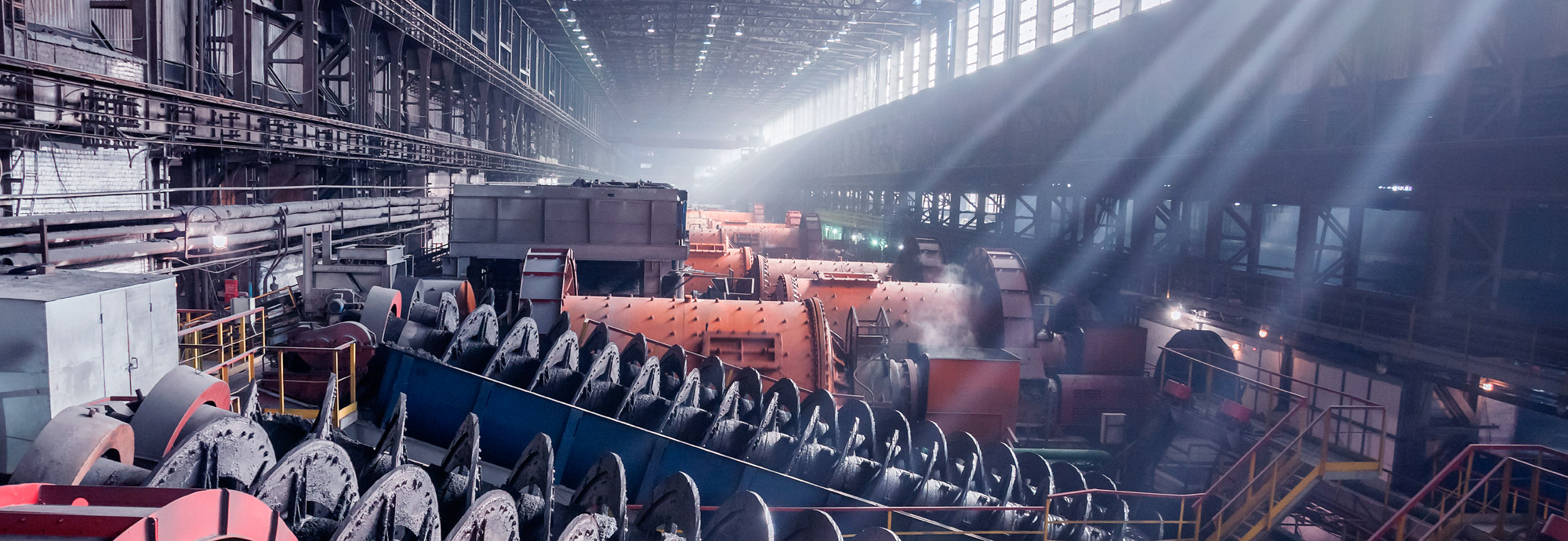
Modular personnel positioning system for manufacturing and processing plants
An effective solution for tracking the location of employees and equipment on site to ensure industrial safety and occupational health and safety.
Personnel positioning and collision avoidance at industrial plants
RealTrac Plant is a safety system that helps meet industrial safety requirements at processing facilities, plants, factories and other industrial enterprises.
The solution determines the location of workers and vehicles on the premises of an industrial or processing plant in real time and prevents collisions between vehicles and personnel. It also covers the tasks of implementing a multifunctional industrial safety system at coal processing plants.
Problems we solve
- Vehicles hitting people.
- Collisions between vehicles.
- Finding people quickly in an emergency.
- Confirming that no one is in hazardous zones.
- Low personnel efficiency.
Where the solution applies
- Coal processing plants
- Gold recovery plants
- Metallurgical plants and steelworks
- Mining and processing complexes
- Factories producing industrial and other goods
How the system addresses plant challenges
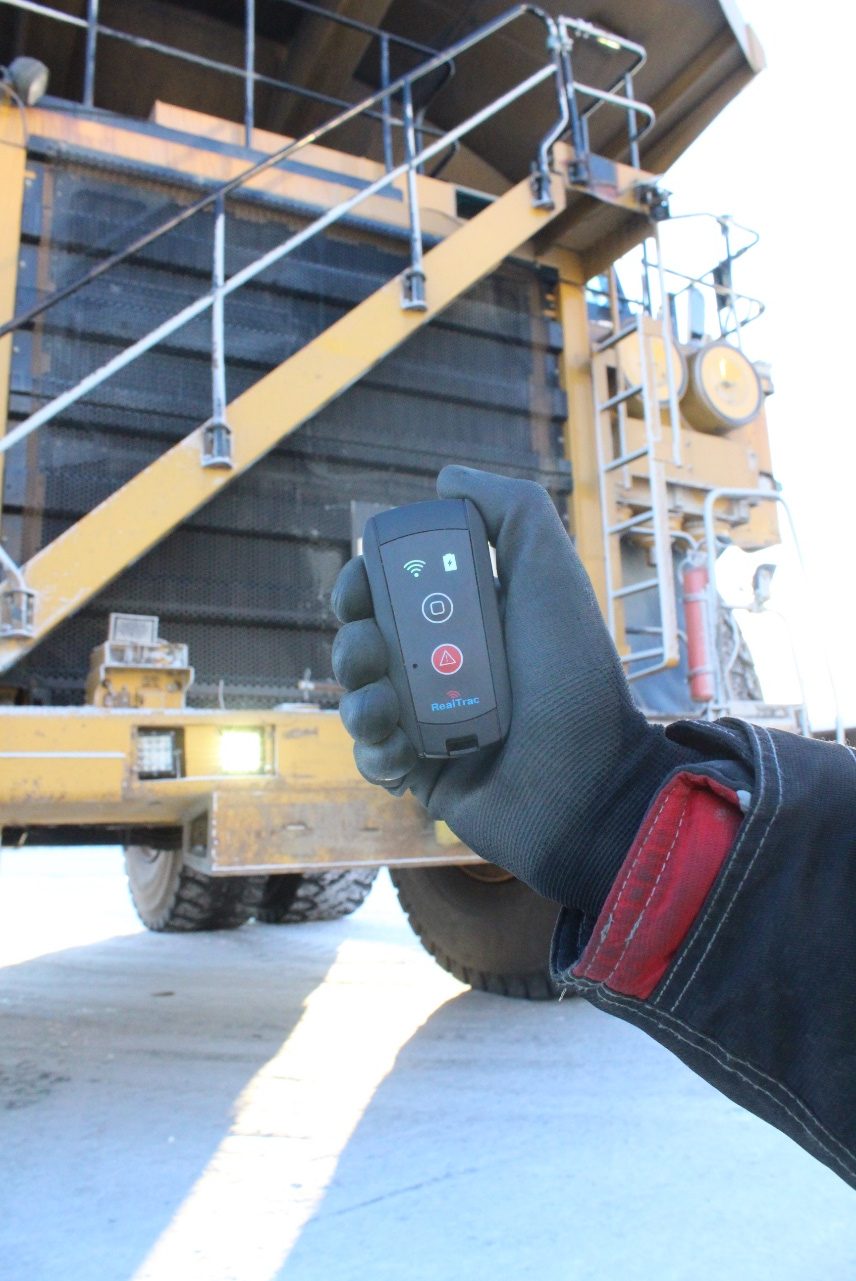
Personal tags
Issued to personnel and installed on vehicles: location, alarm button, man-down and no-motion detection.
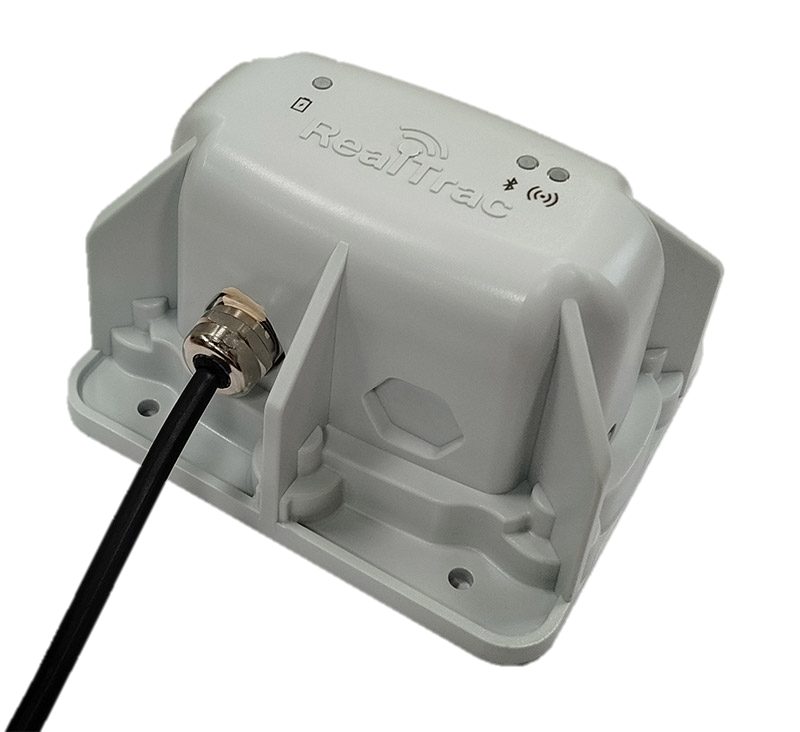
Base stations and access points
UWB / BLE access points indoors, LoRa / LTE base stations across the site.
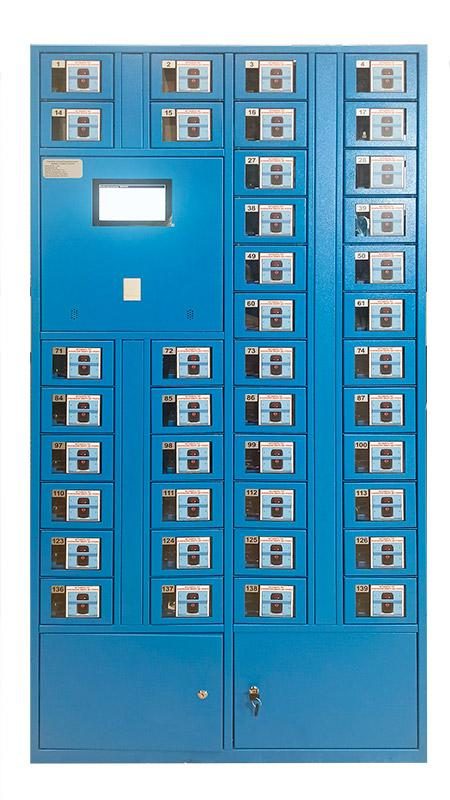
Tag charging and dispensing cabinet
The cabinet charges tags, assigns them to employees by their access control card and checks that they work properly.
Dispatcher map with tags and reports
Current location of personnel and vehicles, events and alarms in real time.
Plan vs. actual analytics
Comparison of planned and actual work by zone, crew and work permit.
Positioning tasks we solve
Tracking workers' location across the site
The dispatcher or operator receives real-time data on the current location of all workers and vehicles, as well as the route each object has traveled over a given period.
Access level control
Geofences with different access levels let the dispatcher always know whether a worker is in a permitted or a restricted zone. Reports and analytics reveal systematic access violations.
Working time and time-in-zone control
The system records when employees enter and leave a geofence, monitors their presence at work sites and work zones, and notifies them when they need to leave a zone. Data is stored on the server for up to 10 years.
Emergency notification of personnel
The data channel carries audio notifications about an emergency and the actions personnel must take. It also controls sirens, emergency lighting and other alerting devices.
Evacuation control
Real-time control of the evacuation: elapsed time, movement paths of workers and the location of those who could not reach safe assembly points in time.
Multifunctional industrial safety systems for coal processing plants
Implementation case studyThe RealTrac Plant solution is deployed as part of multifunctional industrial safety systems at coal mining companies.
From 2021 to 2026, more than 190 pilot tests of subsystems were carried out while preparing these safety system implementations, and more than 40 projects were completed. As of the end of May 2026, 4 subsystem implementation projects are underway.
The positioning subsystems are built on UWB and BLE and integrated with the plant's access control system. RealTrac provides design, supply, commissioning and support.
Positioning subsystem
- Zonal positioning (UWB) with an accuracy of about 20 m
- Precise positioning (UWB) with an accuracy of 0.5–3 m, depending on conditions and access point density
- Global positioning (GNSS) with an accuracy of 3–5 m
- Height detection by floor elevation marks
- Man-down and no-motion detection, alarm button
Emergency notification subsystem
- Automatic alert to a person entering a hazardous zone
- Evacuation alert to a group of employees
- Evacuation alert to all employees
Subsystem for locating people trapped by an accident
- If the system at the plant remains operational: online evacuation control and the location of personnel who need help
- If communication with part of the plant is lost: the employee's last known location to within a meter or a zone
Safety system experience at coal processing plants
RealTrac Positioning (RTLS)
Learn more about the productThe product determines the location of employees, vehicles and other objects in different zones and buildings of an industrial plant using several radio technologies. UWB / BLE access points operate inside buildings. Across the site, the existing LTE / pLTE network is used and a backup LoRa network is deployed. The software receives data via the plant's process networks, generates reports for the dispatcher and integrates with the customer's systems.
Three types of positioning
Zonal positioning
Location of a worker or vehicle to within a zone (UWB / BLE, about 20 m).
- Radio detection range: up to 100 m
- Zone size: from 20 m to a zone defined by the customer
- Works only within radio range of the access points
- Implementation cost: low
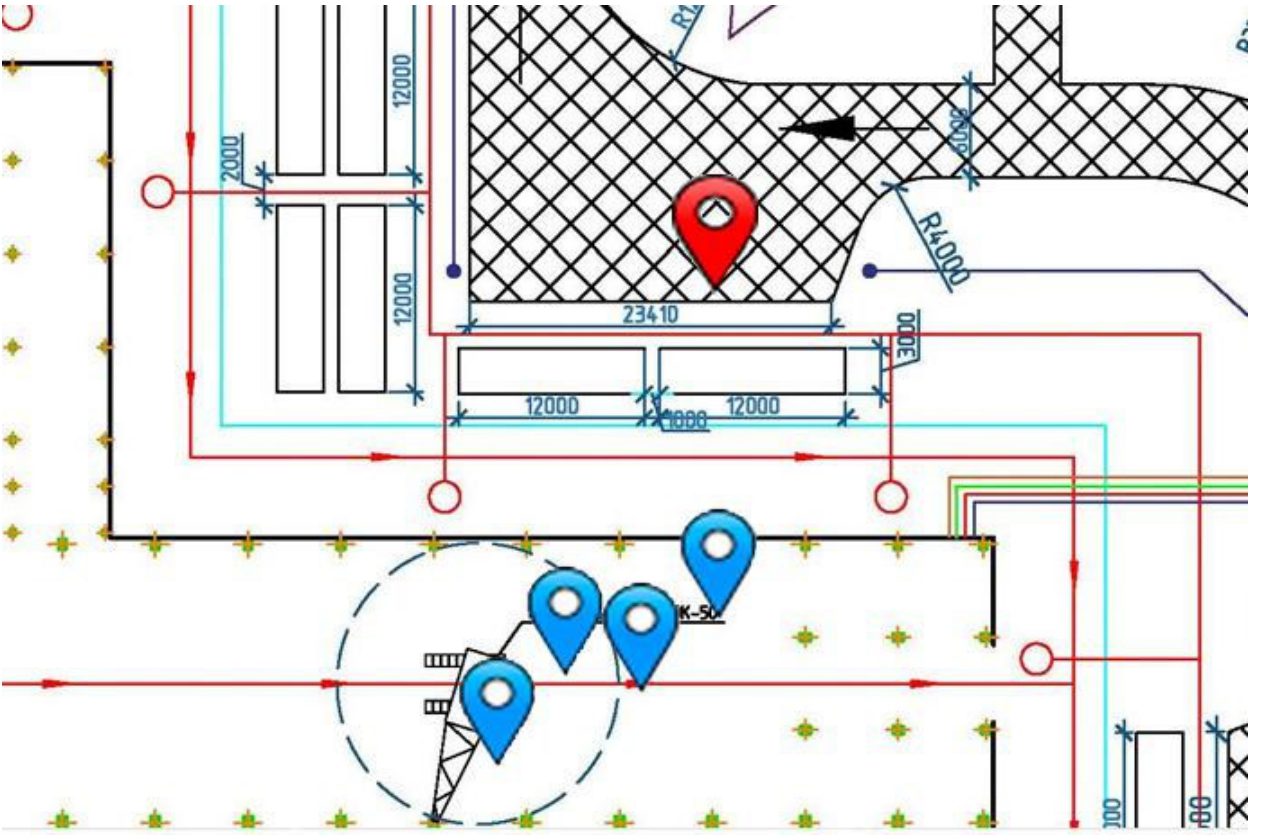
Precise positioning
Location of a worker or vehicle with an accuracy of 0.5–3 m (UWB) inside buildings.
- Height detection by floor elevation marks
- Hazardous work zones and entry control
- Denser access point network
- Implementation cost: medium
Hybrid positioning
One device for buildings and outdoor areas: UWB / BLE indoors and GNSS (3–5 m) in open areas.
- Alarm button and programmable button on the tag
- Emergency alerts sent to tags
- Access control zones, alerts, reports, API
- Developed in-house by RealTrac
Outdoor positioning: data transmission over LoRa and LTE / pLTE
Benefits of the RealTrac LoRa network
- Data transmission range between an access point and a tag of up to 3 km.
- Coverage of up to 60 km² from a single base station.
- Coordinates transmitted every 1–10 s.
- Developed in-house by RealTrac, with no equivalent on the market.
Positioning system equipment
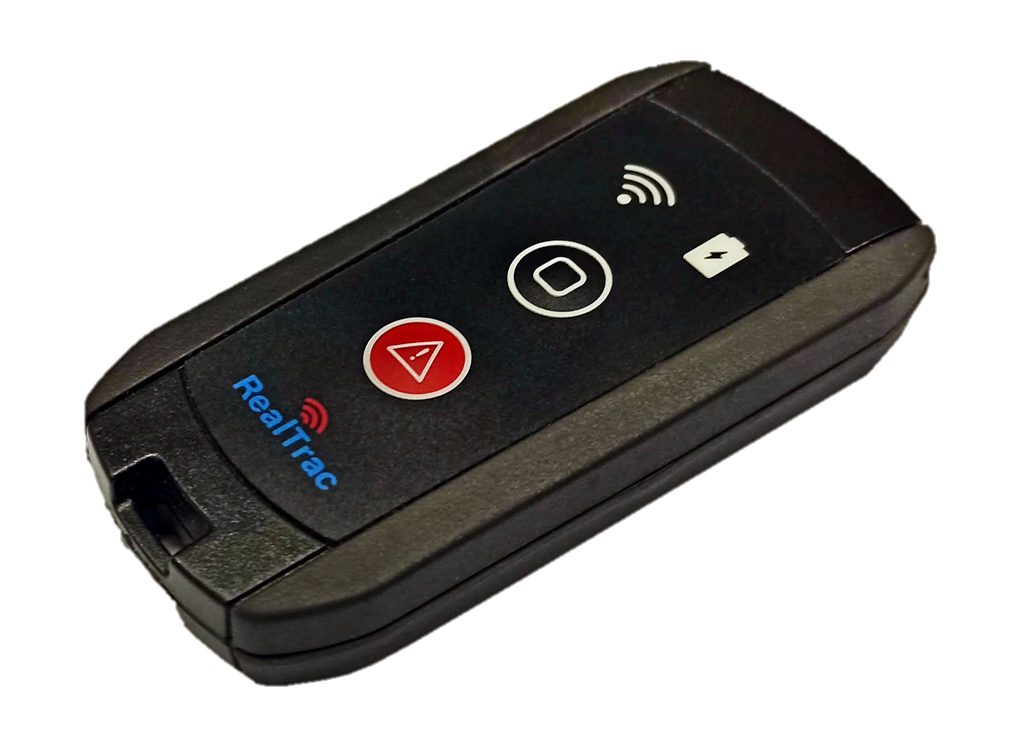
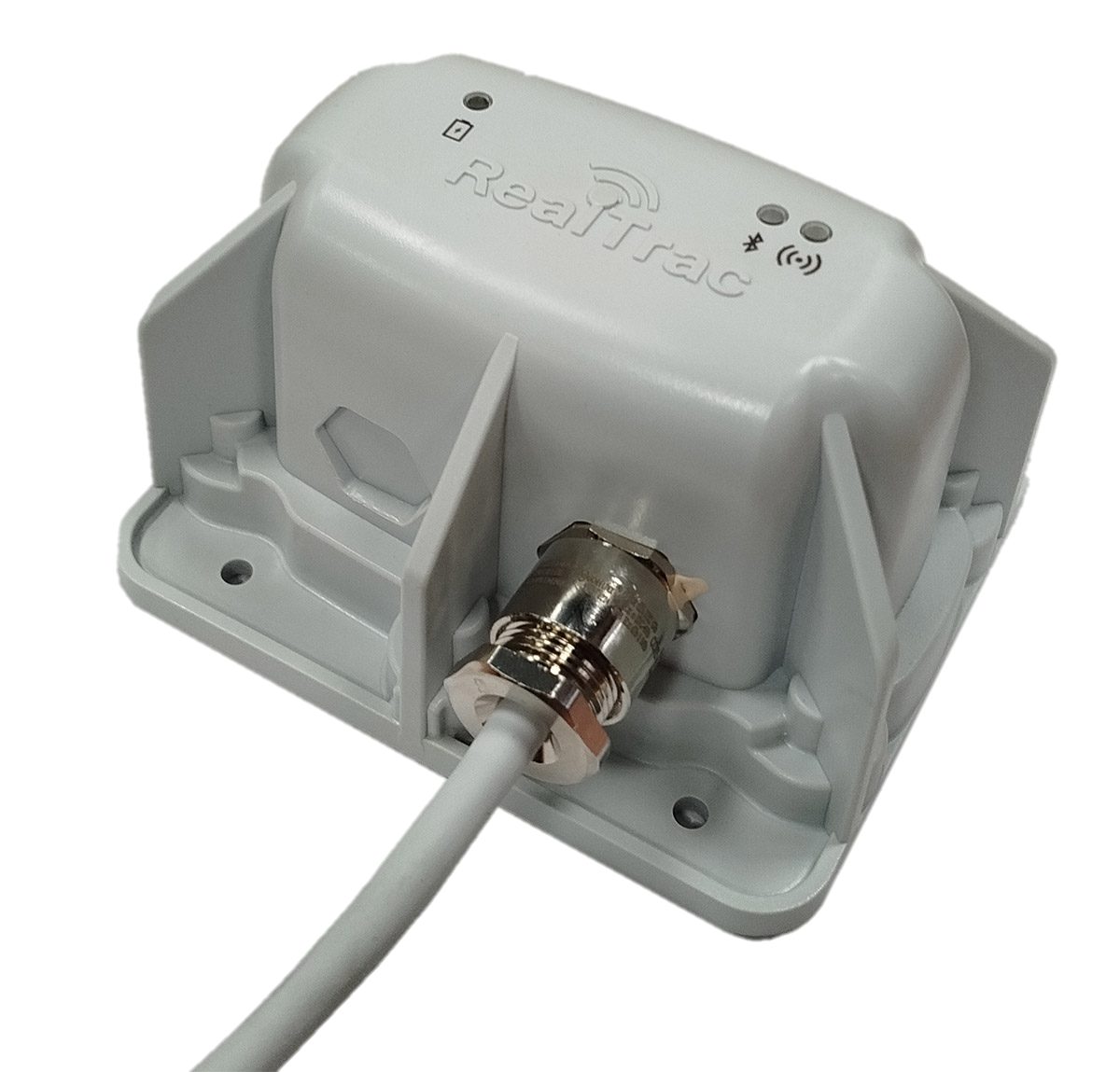
PROD TAG 210
Personal tag for buildings
- BLE, UWB, UHF: zonal (~20 m) or precise (1 m) positioning inside buildings
- Data exchange with the server every 1 s
- Alarm button, man-down and no-motion detection
- Supports the RealTrac Collision Avoidance System (CAS); connects third-party equipment via BLE
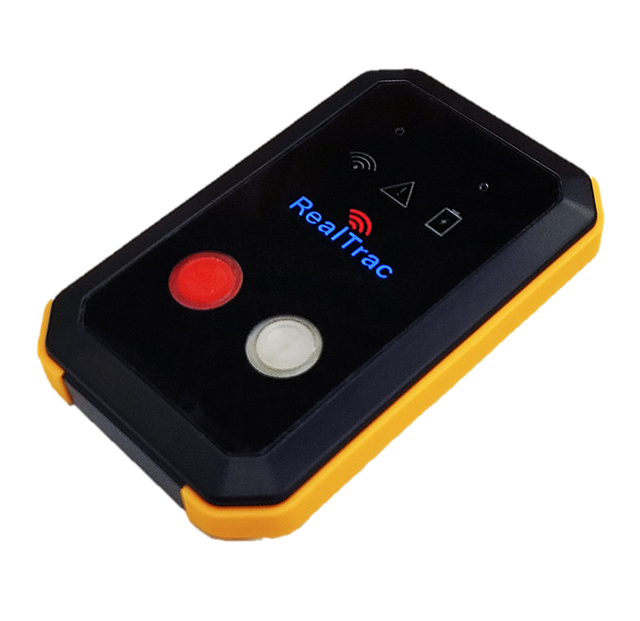
PROD TAG 730
Hybrid personal tag
- BLE, UWB, GNSS: 3 m outdoors, ~20 m or ~1 m inside buildings
- Data transmission to the server via LTE / pLTE, LoRa backup channel
- Alarm button, man-down and no-motion alarms
- IP67, RealTrac CAS support; explosion-proof version EXIA TAG 730
PROD POINT 520
Industrial access point
- BLE, UWB, UHF: zonal (~20 m) and precise (~0.5 m) positioning
- Tag communication range of up to 100 m over UHF
- PoE power, IP67 enclosure
- The access point network can be reused for IP video surveillance and SIP telephony
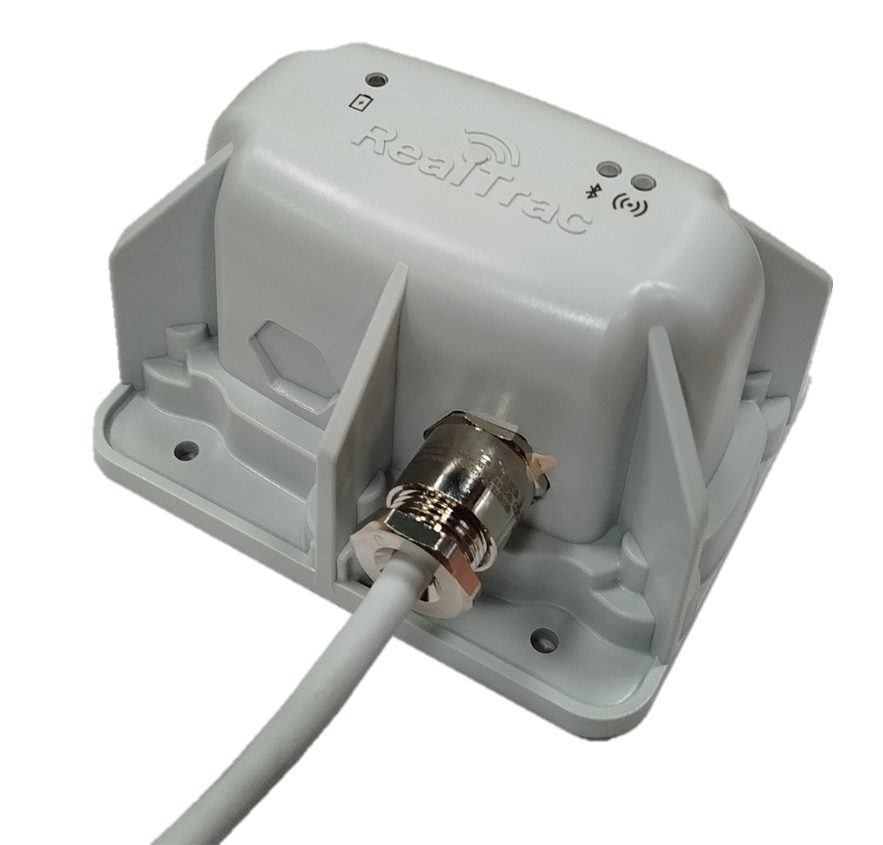
EXIA POINT 520
Explosion-proof access point
- Same functions as PROD POINT 520
- Explosion-proof version for hazardous areas
BASE ACC 672 / 673
Tag dispensing and charging station
- Wireless Qi charging in up to 2 hours
- Tag assigned to an employee by access control card (Em-Marine, MIFARE, PIN code)
- Battery monitoring, tag presence in the slot, upload of routes and hazardous zones, firmware updates
- Modular configuration
LoRa base station
Data transmission across the site
- Receives tag data at distances of up to 3 km; one station covers up to 60 km²
- REALTRAC-LORA protocol: up to 3,600 communication sessions with each tag per hour
- 1 s polling interval for 100 tags in one radio segment
- Primary channel LTE / pLTE, backup channel LoRa
Tag dispensing and access control integration
The cabinet for charging and issuing tags integrates with the local access control system. An employee can enter the production area only after taking a charged tag from the cabinet, which links their access card to the tag: no tag, no access to the work area. The cabinet automatically reads tag data, monitors the charge and the presence of each tag in its slot, uploads routes and hazardous zones and updates firmware.
Software
Learn more about the softwareRealTrac Server: calculates and stores tag location data; analytical alerts (heat maps of personnel and vehicles, time in zones, equipment tracking); alerts to the control room about falls and entry into hazardous zones; runs on a server with free and open-source software, without additional licensing; open protocol (API) for integration with third-party systems; several buildings or sites on a single server. The server can be hosted on site, remotely or in the cloud.
RealTrac Client: a thin client with no installation required on the dispatcher's or manager's workstation; visualization of current data; analytics and report builder; metrics and business processes based on geofences; access level management; connection to a remote server.
RealTrac Collision Avoidance System (CAS)
Learn more about the productRealTrac CAS is designed to reduce accidents involving collisions between vehicles and machinery, as well as vehicles hitting personnel, in conditions of limited or poor visibility at an industrial site. The system aims to reduce accidents involving workers and to cut the costs of downtime and vehicle repairs after accidents.
Two control scenarios
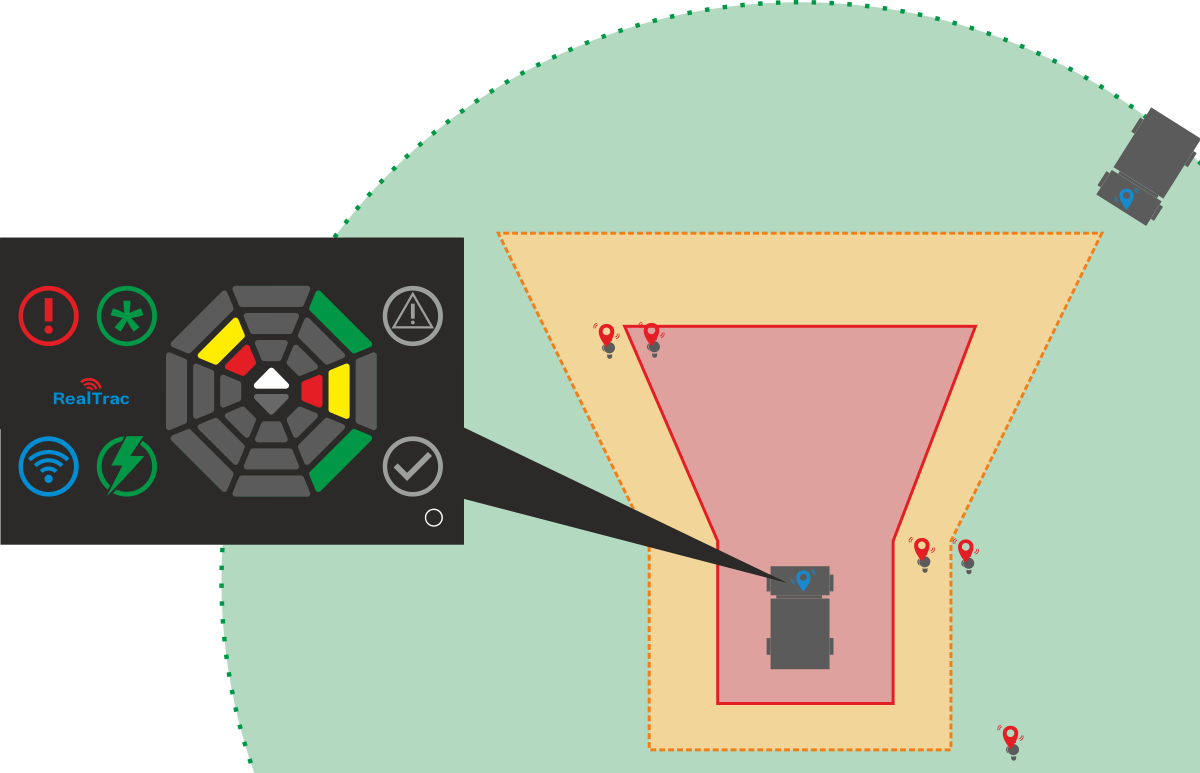
Vehicle to vehicle. Safer movement of industrial vehicles in poor visibility and lower costs of downtime and repairs after collisions: the system detects a dangerous approach between vehicles and warns the driver or operator of a collision risk.
Vehicle to person. Fewer injuries caused by vehicles hitting people and safe maneuvering when people gather around a machine: the system records the hazardous incident and warns that a worker is in the danger zone near the vehicle.
Advantages
Minimal false alarms
Precise positioning of objects around the machine and flexible configuration of detection zone size and shape, based on vehicle specifics and direction of travel.
Fully autonomous
Does not depend on a stable power supply or satellite signals, which matters at remote sites and indoors.
Outdoors and indoors
The same equipment works in open areas, maintenance zones and processing plant workshops.
Short- and long-range detection
UWB for accurate direction and distance to nearby objects, UHF for detection at up to 200 m, including behind obstacles.
Three control zones
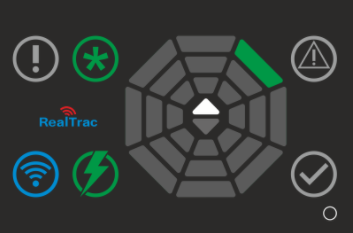
Attention zone
- Display: green
- Tag: intermittent vibration and LED light
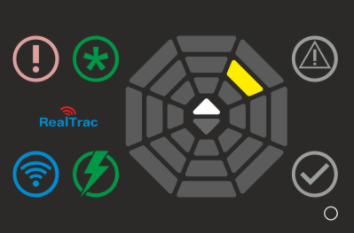
Danger zone
- Display: yellow with an audible alert
- External vehicle warning (optional): beacon light, flashing yellow marker lights
- Tag: repeated vibration, LED light and sound signal
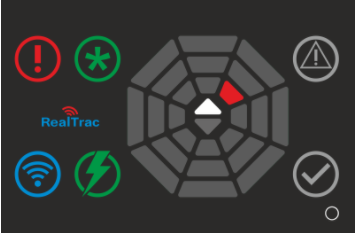
Emergency zone
- Display: red with an audible alert
- External vehicle warning (optional): beacon light, siren
- Tag: continuous vibration, LED light and sound signal
Seven alert types: color and sound on the in-cab display; vibration, sound and light on the tag; and, optionally, sound and lights on the vehicle. Alert intensity is configured for each control zone.
No needless alerts for the driver: dynamic zones
Optimal zone shape
The zone around the vehicle is narrow at the sides and rear and long at the front: it triggers where the machine is heading.
Speed-dependent
The faster the vehicle moves, the longer the zone. When the vehicle is parked or the parking brake is on, the zone is minimal.
Direction and boom
Zones adapt to the direction of travel and the position of the working equipment, such as boom extension.
Driver in the cab is ignored
The system stops reacting to the driver's tag as soon as the driver is in the cab, and notifies the operator of equipment faults.
RealTrac CAS equipment
PROD TAG 730 personal tag
Issued to workers: determines their position relative to vehicles fitted with RealTrac CAS antennas and warns with light, sound and vibration.
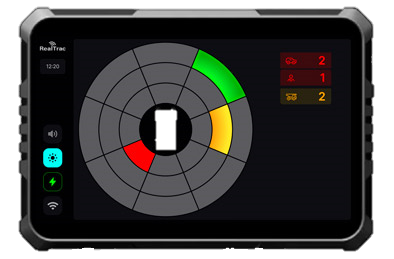
PROD VCD 050 operator display
Installed in the cab: visual overview of the vehicle's surroundings, proximity alerts, event log, detection of a person in the cab; CAN, Ethernet and dry contact interfaces; IP66.
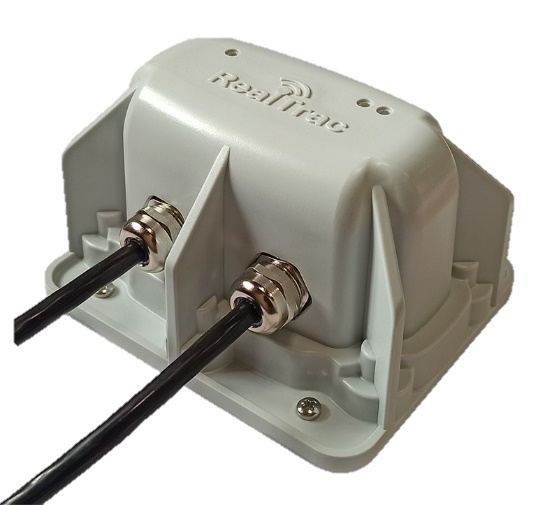
PROD VBU 030 antenna
Mounted on the vehicle body (4 or more, depending on size and configuration): detects personal tags and the antennas of other vehicles, UWB accuracy of 0.1 m, IP69.
Additional features and autonomous operation
Black box
Records system events and sends them to the RealTrac server over Wi-Fi or LTE.
Integration with SCADA and fleet management
Events and statuses are transferred to process control systems (SCADA) and the fleet management system.
Vehicle control
Braking, speed reduction and start interlock in case of a dangerous approach.
Infrastructure objects
Alerts when approaching buildings, overpasses, supports and other infrastructure.
Autonomous operation
Embedded software, fully independent of other systems and the data network.
Feedback channel
When a channel is available, data on dangerous approaches and collisions is sent to the RealTrac server for incident analysis and reports.
Benefits of the RealTrac Plant solution
- Integration with dispatching and industrial control systems and other enterprise systems.
- Uses the plant's existing infrastructure.
- Modular system: features are added as needed.
- Open protocol (API): data transfer to HR systems, process control systems (SCADA) and others.
- Move from zonal or global positioning to hybrid positioning without major changes, thanks to a single infrastructure.