
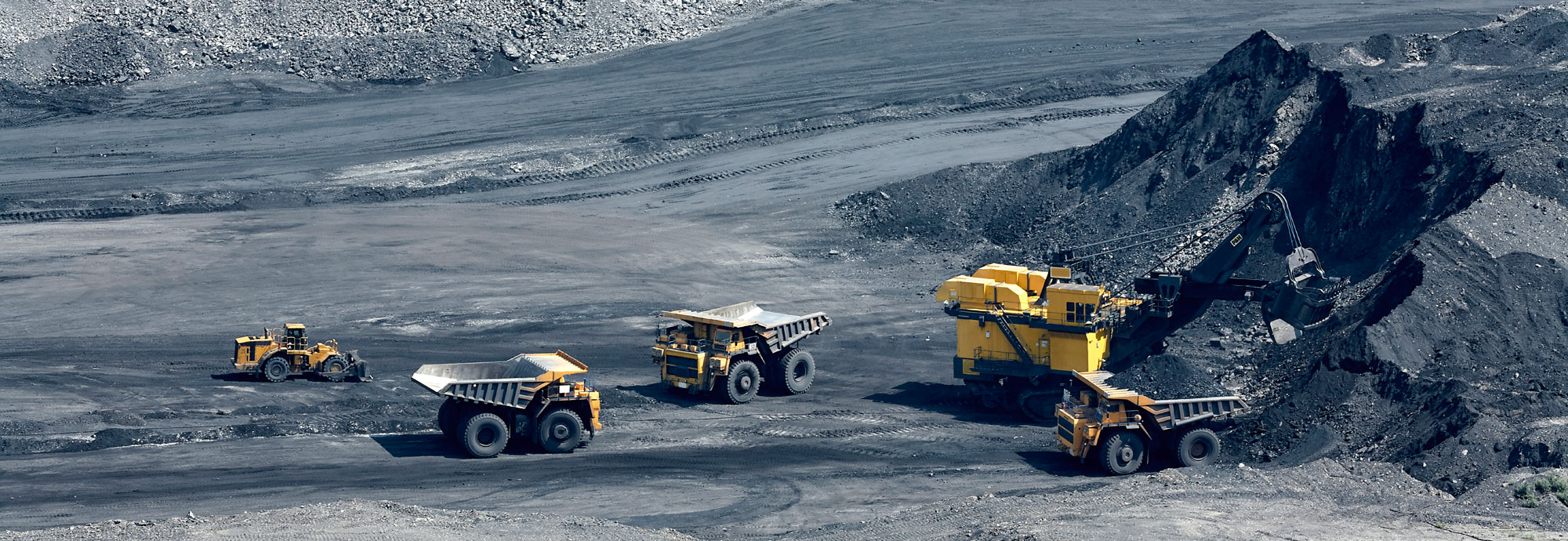
Multifunctional safety system for open-pit mines and open-pit coal mines
An effective solution for tracking the location of miners and vehicles and preventing collisions at open-pit mining sites.
Personnel and vehicle positioning and collision avoidance for open-pit mines, open-pit coal mines and surface mining operations
The RealTrac open-pit mining solution is a multifunctional industrial safety system for the digital transformation of safety at open-pit mines, open-pit coal mines and industrial sites. It includes positioning modules and a collision avoidance system, which significantly reduces the risk of incidents involving personnel and vehicles, improves efficiency and cuts costs.
The solution locates (positions) miners and mining vehicles in real time and provides collision avoidance, data transmission and telemetry.
What problems we solve
- Vehicles hitting people.
- Vehicles colliding with each other.
- Finding people quickly in an emergency.
- Confirming that no one is in a danger zone.
- Low personnel efficiency.
Safety at open-pit mines: key industry challenges
Modern mining companies face a number of problems that directly affect safety and production losses. Large vehicles, limited visibility, the lack of centralized control and the human factor increase the probability of emergencies.
RealTrac addresses these challenges with digital technologies: real-time movement control, incident analytics, automatic notification and collision warnings. This improves overall industrial safety and supports zero-harm goals.
Vehicle collisions
Large vehicles, limited visibility and the human factor: vehicles hitting people and colliding with each other.
Finding people in an emergency
Locating people quickly in an emergency and controlling evacuation from a danger zone.
Danger zones and access
Confirming that no one is in a danger zone, controlling access levels and restricted areas.
Personnel efficiency
Objective data on the movements and working time of personnel and vehicles instead of rough estimates.
RealTrac Collision Avoidance System (CAS): preventing collisions with people and vehicles
More about the productThe system is fully standalone and does not depend on GPS or external communications, which is especially important at open-pit mines and remote sites. Alert zones change dynamically with the speed, direction of travel and operating mode of the vehicle.
System objectives: reduce the number of accidents involving miners and cut the costs of downtime and vehicle repairs after accidents.
Vehicle to vehicle
Objectives
- Safer movement of mining vehicles in poor or limited visibility
- Lower costs of downtime and repairs of mining vehicles after collisions
Functions
- Recording dangerous approaches between vehicles and mining equipment
- Warning the driver, the miner or the operator of a possible collision
Vehicle to person
Objectives
- Fewer injuries caused by mining vehicles hitting people
- Safe maneuvering of mining vehicles when people gather around them
Functions
- Recording dangerous incidents involving a vehicle hitting a miner
- Warning that a miner is in a danger zone
How it works
To prevent vehicles from hitting people and colliding with each other, RealTrac combines two radio technologies: UWB for short-range detection and UHF for long-range detection. The system accurately determines the direction and distance to nearby objects and detects objects at up to 200 meters, including around corners and outside the line of sight.
The miner's personal tag and the antennas on the vehicle exchange data without satellite navigation. The in-cab display shows the driver the situation around the vehicle, and the tag warns the worker with vibration, light and sound.
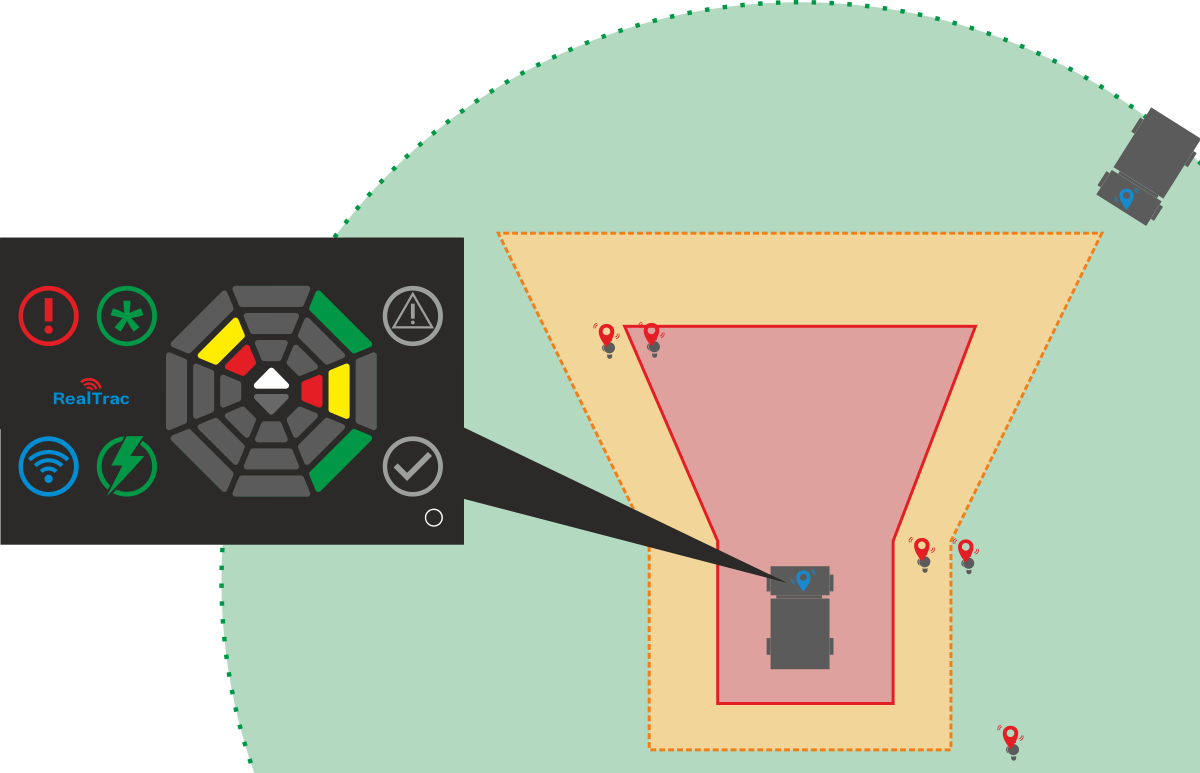
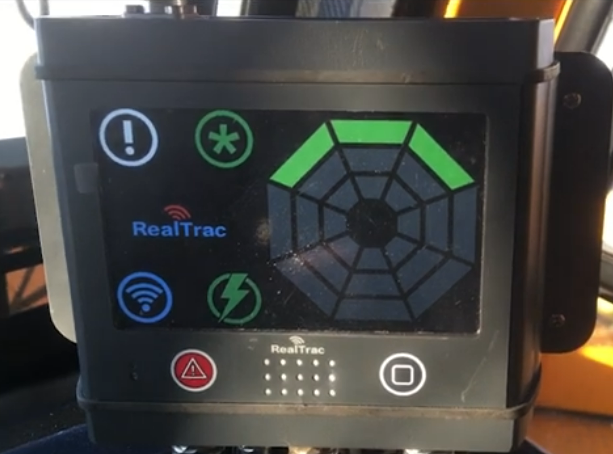
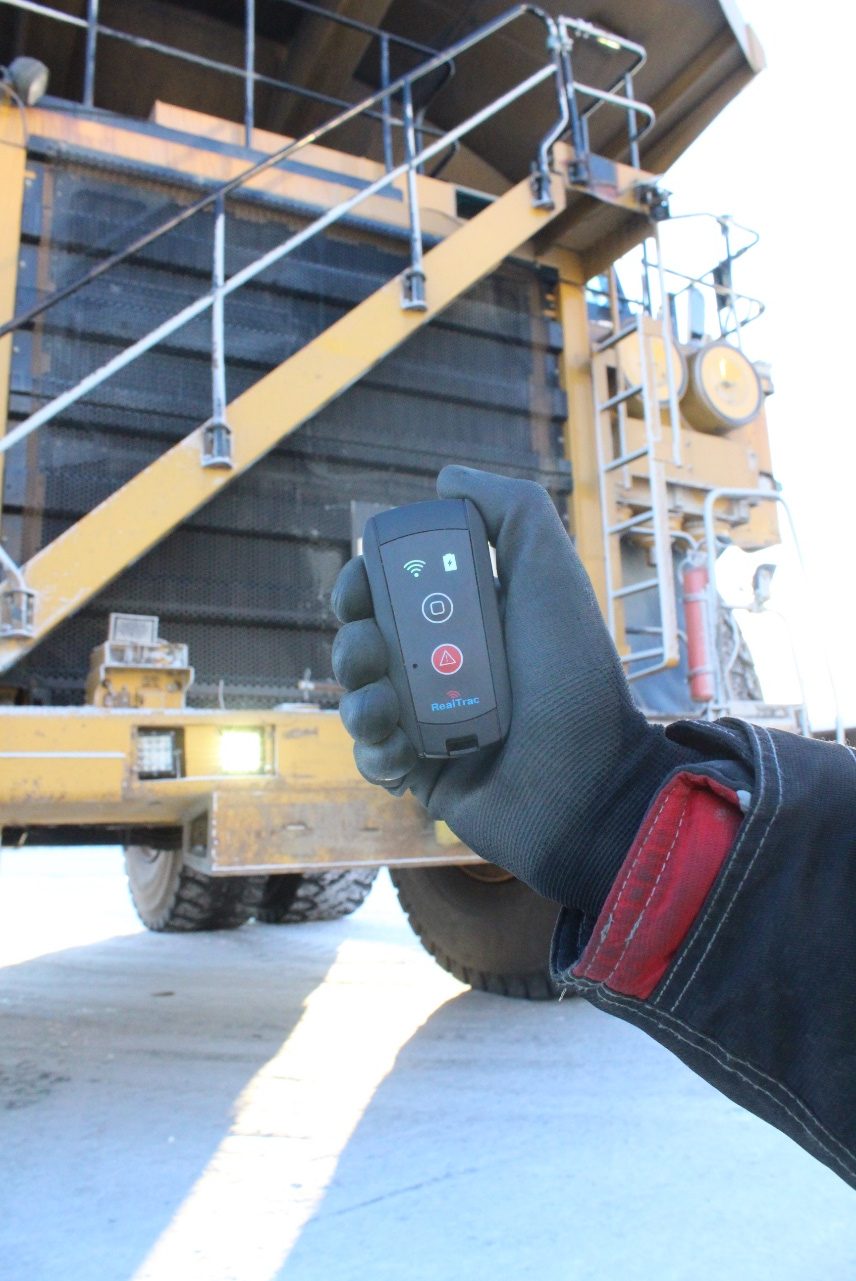

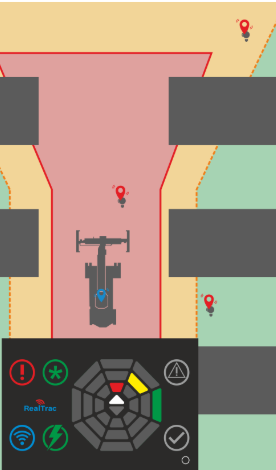
Three control zones
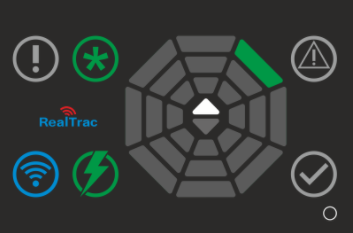
Attention zone
- Display: green
- Tag: intermittent vibration and LED light
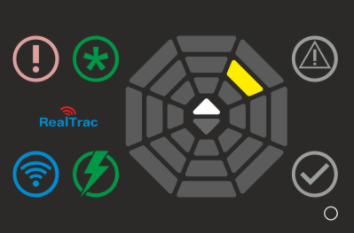
Danger zone
- Display: yellow and an audible alert
- External vehicle alert (option): beacon light, flashing amber marker lights
- Tag: repeated vibration, LED light and an audible signal
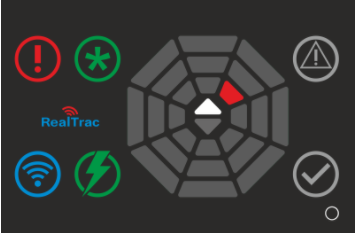
Emergency zone
- Display: red and an audible alert
- External vehicle alert (option): beacon light, siren
- Tag: continuous vibration, LED light and an audible signal
Seven types of alerts
Vehicle sound (option)
Vehicle lights (option)
Display color
Display sound
Tag vibration
Tag sound
Tag light
Alert intensity is configured for each control zone.
No needless alerts for the driver
Dynamic zones. The zone around the vehicle has an optimal shape: narrow at the sides and rear, long at the front. Zones change shape with the speed, direction of travel, parking brake position and boom extension. The system stops reacting to the driver as soon as the driver is in the cab.
Parking and shift change mode. When the automatic transmission selector of a haul truck is set to park or the parking brake is applied, the system switches to silent mode and does not notify the driver or the personal tags about presence in a danger zone: the truck cannot move at that moment.
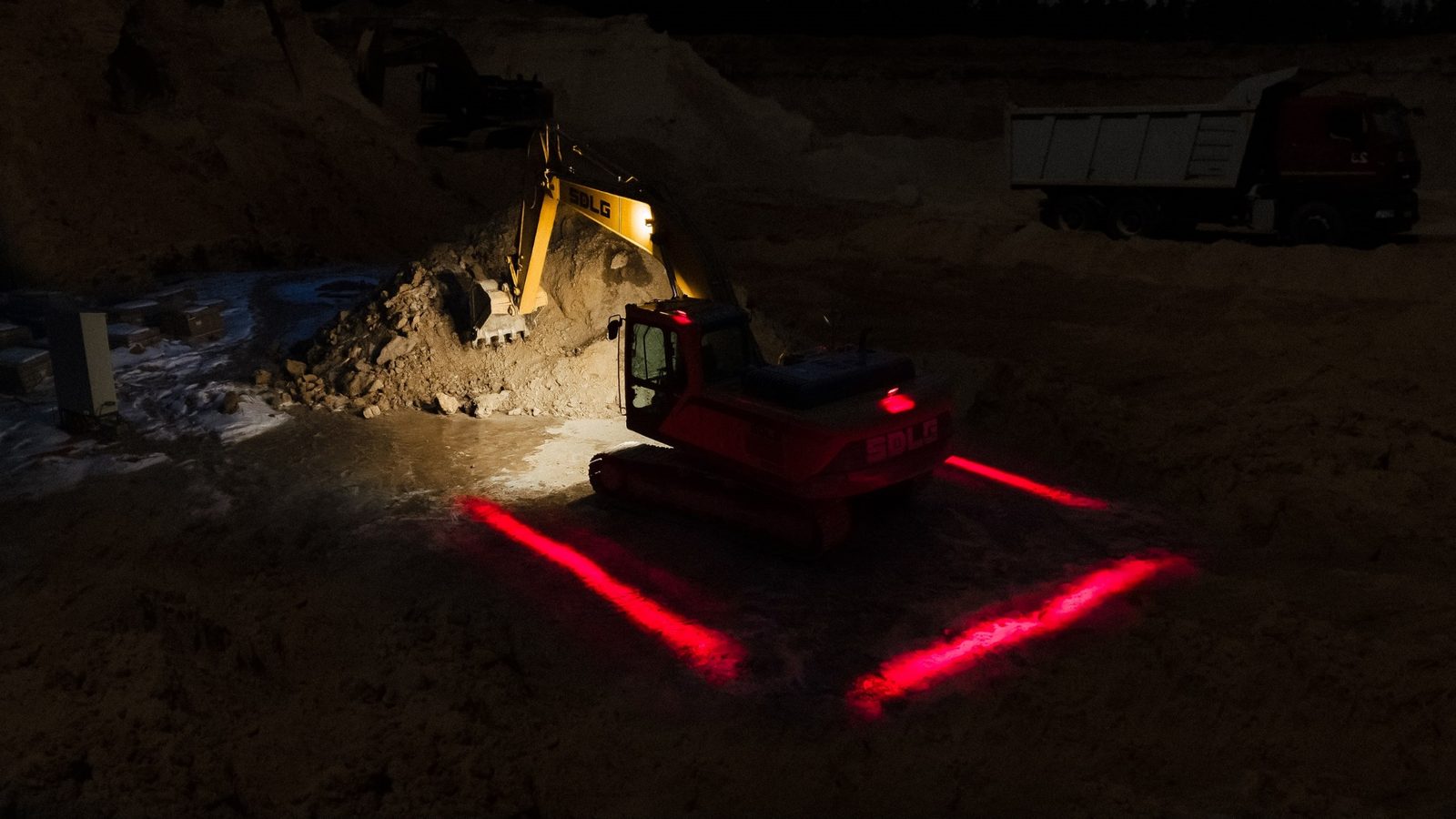
Color demarcation
An additional function: RealTrac CAS detects other objects in the control zones around the vehicle, and when an object enters the red zone, the light demarcation around the vehicle turns on or starts flashing to attract the attention of personnel.
Operator alert on equipment failure
The in-cab display tells the operator that the system cannot perform its functions, for example when a cable is damaged or an antenna is broken. The event is sent over LTE or Wi-Fi to the RealTrac server and appears in the dispatcher interface, so the dispatcher sees a faulty kit right away.
Additional capabilities
- Event recording to a black box.
- Transfer of system events to the RealTrac server over Wi-Fi or LTE.
- Integration with process control systems (SCADA), fleet management systems and other systems.
- Vehicle control: braking, speed reduction, blocking the start of movement.
- Alerts when approaching infrastructure objects.
- RealTrac Surround View System (SVS): when connected to a recorder with eight surround view cameras, the video stream is shown on the tablet and sent to the server.
- RealTrac Driver Monitoring System (DMS): monitoring of the driver's condition, speed and vehicle position in traffic with warnings about potentially dangerous situations.
RealTrac CAS benefits
- Minimum false alarms: accurate positioning of objects around the vehicle and flexible configuration of detection zone size and shape to suit the vehicle and its direction of travel.
- Fully standalone: does not depend on a stable power supply or satellite communications, which is especially important at remote sites and in deep open pits.
- Works the same outdoors and indoors on the same equipment: in the open pit, in service and maintenance areas and inside processing plant buildings.
- Short- and long-range detection: up to 200 meters, within the line of sight and around corners.
360-degree control around the vehicle
Distance and direction to another object determined with an accuracy of up to 1 meter

Three control zones of any size and configuration
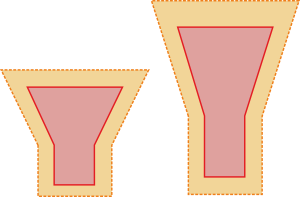
Dynamic control zones around mining vehicles, depending on speed or the position of the working equipment
Standalone operation or operation as part of other mining enterprise systems

Short payback period
RealTrac CAS equipment
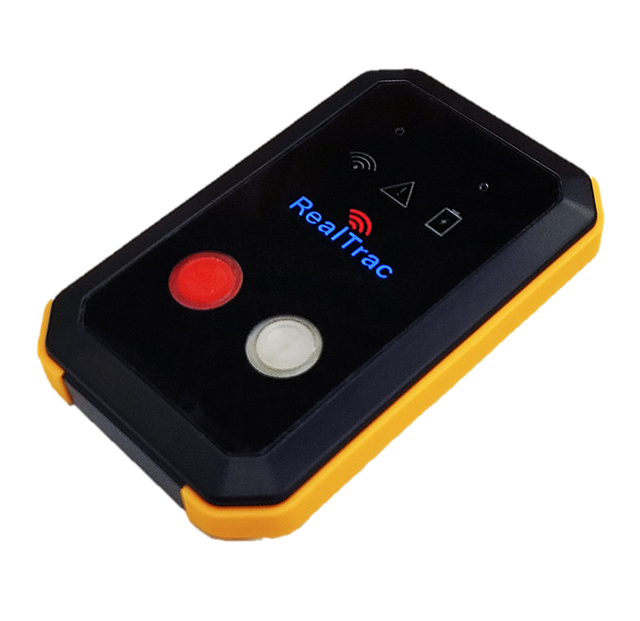
PROD TAG 730 personal tag
Hybrid BLE, UWB and GNSS positioning: GNSS 3 m, UWB 1 m. Data transfer to the server over LTE / pLTE with a LoRa backup channel. Panic button, alarm on a fall or no movement. IP67. Supports RealTrac CAS.
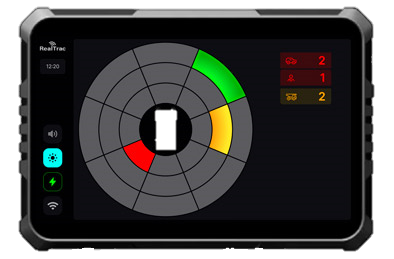
PROD VCD 050 tablet
Visual and audible alerts, event log, in-cab person detection. CAN, Ethernet and dry contact interfaces; Wi-Fi, LTE; GNSS positioning. IP66. Connection of surround view cameras or the RedZone system.
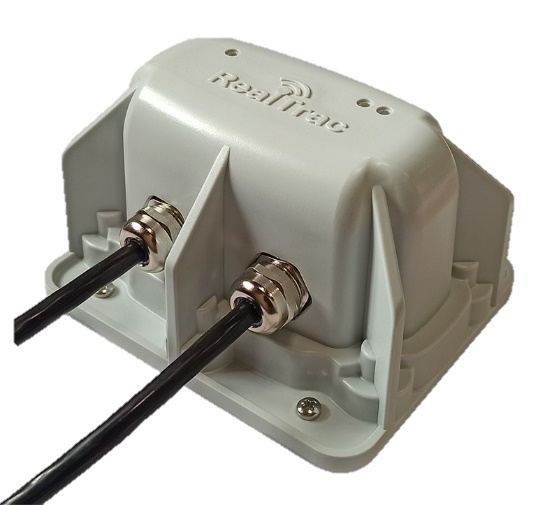
PROD VBU 030 antenna
BLE, UWB, UHF; UWB accuracy 0.1 m. Impact-resistant IP69 housing with status LEDs. Mounted on the vehicle body, 4 to 8 units.
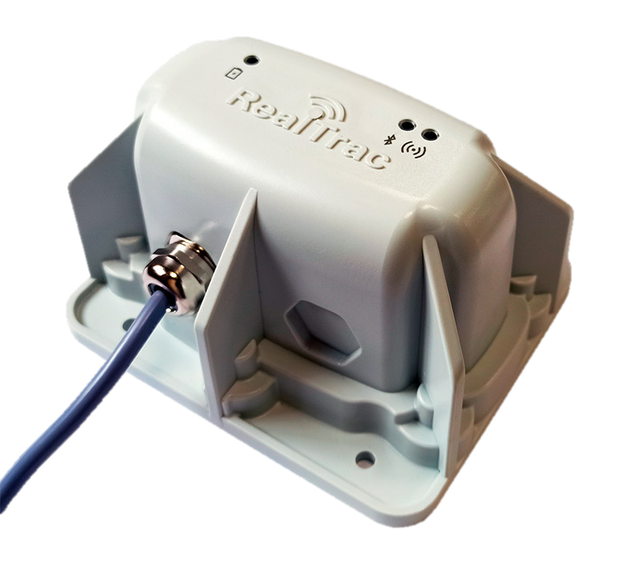
PROD VTAG 730 vehicle tag
BLE, UWB, GNSS: accurate vehicle positioning inside buildings (1 m or zone level) and on site (3 to 5 m). Powered by a battery and the 12 to 24 V on-board network; temporary installation possible. IP69.
The system has built-in software and operates independently of other systems and of the data network. When a feedback channel is available, data on recorded dangerous approaches and collisions is sent to the RealTrac server for incident analysis and reporting.
Example of RealTrac CAS installed on mining vehicles
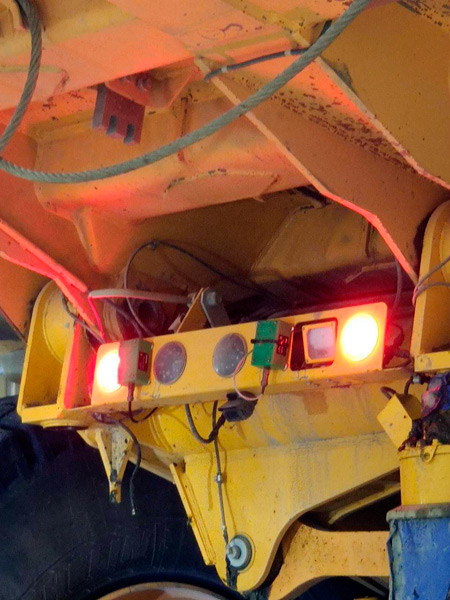
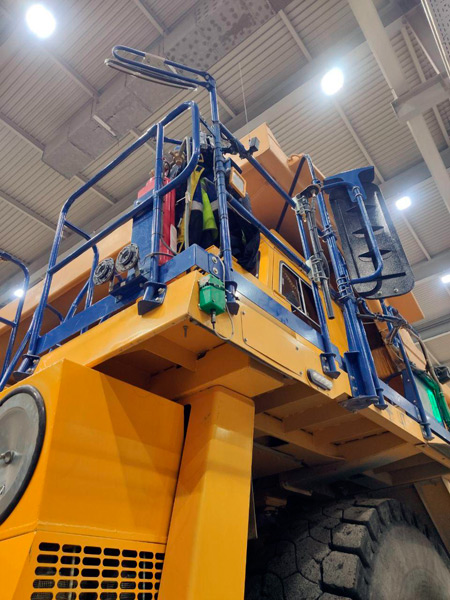
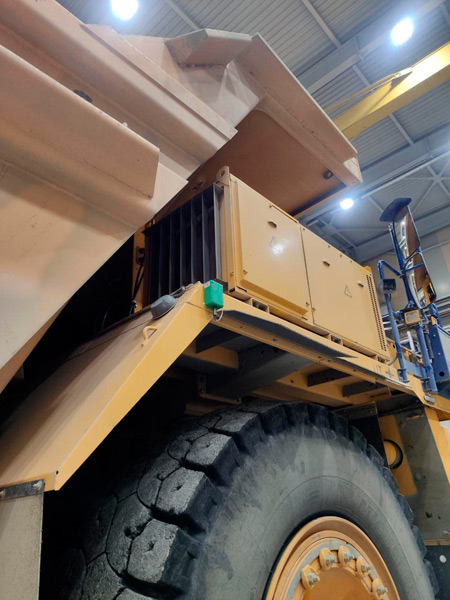
Case study: fewer mining vehicle incidents
More about the case studyAn open-pit mine with its own fleet of 110 vehicles plus visiting vehicles. Background: the number of vehicle incidents had doubled, a program to reduce accidents was adopted, and the goal was to cut repair and downtime costs. In the two years before implementation there were at least three significant incidents with combined losses of more than $890,000.
After RealTrac CAS was implemented, the number of mining vehicle incidents fell from 27 to 7 per year.
RealTrac Positioning (RTLS): control of personnel and vehicles
More about the productThe positioning system provides accurate control of personnel and vehicle movements across the entire site, including buildings, underground areas and hangars. It uses personal and vehicle tags with hybrid positioning technologies: BLE, UWB, GNSS. The system uses the same equipment as RealTrac CAS.
Data is transmitted over reliable communication channels: LTE / pLTE and LoRa. This makes it possible to receive and store information even during communication outages and to operate in standalone mode.
Tasks addressed
Location of miners
The dispatcher receives real-time data on the current location of all miners and mining vehicles and on the routes they have covered over a given period.
Access levels
Geofences with different access levels: the dispatcher always knows whether a miner is in a permitted or a restricted zone. Reports reveal systematic violations.
Working time and time in a geofence
Recording entry to and exit from a geofence, controlling presence in work areas, notifying when a zone must be left. Data is stored on the server for up to 10 years.
Alerts for drilling and blasting
Control of personnel withdrawal from the danger zone before drilling and blasting: time, routes and the location of those who did not reach the assembly points.
Evacuation and search for people caught in an accident
Real-time evacuation control: time spent, movement routes and the location of workers who did not reach the safe assembly points.
Three types of positioning
Zonal positioning
Locating a miner or a vehicle with zone-level accuracy.
- Accuracy: ±20 meters
- Radio detection range: up to 100 meters
- Zone configuration: from 20 meters to a zone (configured to customer requirements)
- Feedback channel: BLE or another protocol on customer request
- Limitation: works only within radio range of the access points
- Implementation cost: low
Global positioning
Locating a miner or a vehicle with meter-level accuracy.
- Accuracy: ±1 to 5 meters
- Radio detection range: unlimited
- Zone configuration: from 10 m²
- Feedback channel: Wi-Fi, LoRa or another protocol on customer request
- Limitation: requires visibility of at least four satellites
- Implementation cost: low
Hybrid positioning
Combines the advantages of zonal and global positioning in one tag.
- Accuracy: ±1 to 5 (20) meters
- Detection range: unlimited
- Zone configuration: from 10 m²
- Feedback channel: Wi-Fi, LoRa or another protocol on customer request
- Zonal positioning works indoors, global positioning in open areas
- Implementation cost: medium
Typical solution architecture
Personal tag → LTE base stations (primary channel) and LoRa base stations (backup channel) → server room → dispatcher workstation. Data can be transmitted over LoRa or over LTE / pLTE.
Positioning system equipment
PROD TAG 730 personal tag
Global positioning with an accuracy of up to 3 m (GNSS), local zonal (about 20 m) and high-precision (about 1 m) positioning with BLE / UWB access points. Coordinates updated once per second, LTE / pLTE, LoRa backup channel up to 3 km.
PROD VTAG 730 vehicle tag
Vehicle positioning on site with an accuracy of 3 m and inside buildings with zone-level or 1 m accuracy. Data exchange with the server once per second, LTE / pLTE, LoRa backup channel. 12 to 24 V power supply.
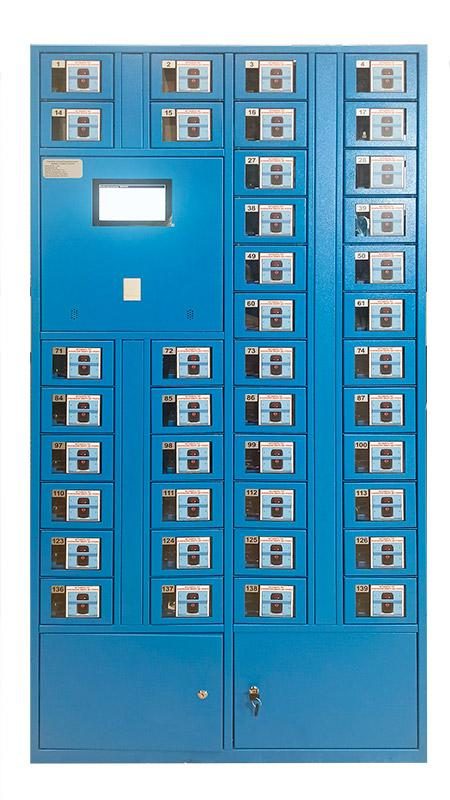
BASE ACC 672 tag locker
Automated issuing and charging of personal tags: charging in up to 2 hours, tag assignment to an employee via the access control system, a PIN code or face recognition, battery and tag presence monitoring, from 36 cells.
Benefits of monitoring miners
RealTrac helps companies achieve high levels of safety and reliability in production processes. Accurate positioning and intelligent data analysis improve personnel discipline and open up new possibilities for operational management.
The solution meets digitalization requirements and can be used in ESG and sustainability programs. This makes RealTrac an effective tool not only for reducing accidents but also for strengthening the company's reputation.
Uses the existing infrastructure of the open-pit mine or open-pit coal mine
The equipment is built into the cap lamp, so the miner does not need to carry extra devices
The modular RealTrac system lets you add functions as needed
Move from zonal or global positioning to hybrid positioning without major changes thanks to a single infrastructure

Integration via an open API: data transfer to HR records systems, process control systems (SCADA) and other enterprise systems
Software
More about the softwareRealTrac Positioning includes server and client software: the core, the web interface and modules for management and administration, the report builder, the API, routes and intersections.
RealTrac Server: calculates and stores tag location data; runs on free software without additional licensing; open API for integration with third-party systems; several open-pit mines and processing plants on one server.
RealTrac Client: thin client with no installation on the dispatcher's workstation; visualization of current data; analytics and the report builder; geofence-based metrics and business processes; access level separation; connection to a remote server.
Benefits of the RealTrac open-pit mining solution
- Integration with dispatch systems, fleet management systems and other enterprise systems.
- Use of the existing infrastructure of the mining enterprise.
- Modular system: functions are added as needed.
- Open API: data transfer to HR records systems, process control systems (SCADA) and other systems.
Industry standards: EMESRT PR-5A
The Earth Moving Equipment Safety Round Table (EMESRT) publishes Performance Requirement 5A (PR-5A) for vehicle interaction systems as leading-practice guidance for users and designers. It covers three types of unwanted events: vehicle to person, vehicle to vehicle and vehicle to equipment or environment. PR-5A describes the last three layers of the EMESRT 9-layer control model, where technology helps the operator and the vehicle react.
RealTrac CAS is designed to support these control levels:
- Level 7, situational awareness: information that helps the operator observe and understand hazards nearby, such as where an object is and how far away it is. The RealTrac CAS in-cab display shows the driver the situation around the vehicle and the direction and distance to nearby people and vehicles.
- Level 8, advisory controls: alarms that warn the operator of an imminent threat of collision. RealTrac CAS uses three control zones (Attention, Danger and Emergency) and seven types of alerts for the driver and for the personal tag.
- Level 9, intervention controls: automatic control of vehicle functions to prevent or mitigate a collision. Vehicle control is available as an additional RealTrac CAS capability: braking, speed reduction and blocking the start of movement.
PR-5A also expects the at-risk zone to depend on the equipment type and closure speed. RealTrac CAS zones are configured for each vehicle and change with speed, direction of travel and operating mode.
Level 9 with Nerospec OSCON
RealTrac provides the detection, zoning and decision logic. Integration with Nerospec OSCON, an OEM-independent EMESRT Level 9 vehicle intervention control system, adds automatic intervention in the braking and traction circuits of any machine.
- RealTrac CAS detects an object entering the Emergency zone and issues an intervention request based on the configured rules.
- Nerospec OSCON takes over motion control and automatically reduces speed or performs a controlled stop.
- The combined solution works in surface and underground operations and with mixed OEM fleets.
Together, RealTrac CAS and Nerospec OSCON turn collision avoidance from «warn and display» into «warn, guide and intervene when necessary».
RealTrac at open-pit mines today
 5000+
Trackers at open-pit mines and open-pit coal mines
 30+
Equipped sites