
PROD CAS 1700 collision avoidance system
Warn drivers and workers of dangerous proximity between vehicles and personnel
RealTrac Collision Avoidance System (CAS)
RealTrac Collision Avoidance System (CAS) determines the relative position of equipped objects and warns drivers and workers of a possible collision. The system configuration is selected to match the vehicle dimensions, the danger zones and the conditions at your site.
- Control of vehicle-to-person and vehicle-to-vehicle proximity.
- Alerts for both the driver and the worker.
- Standalone operation: no connection to a server or the Internet is required.
- Integration with external slowdown and stop systems.
Detection works for objects equipped with compatible, working equipment. The system complements existing safety measures and does not replace operator attentiveness.
Proximity control where vehicles work close to people
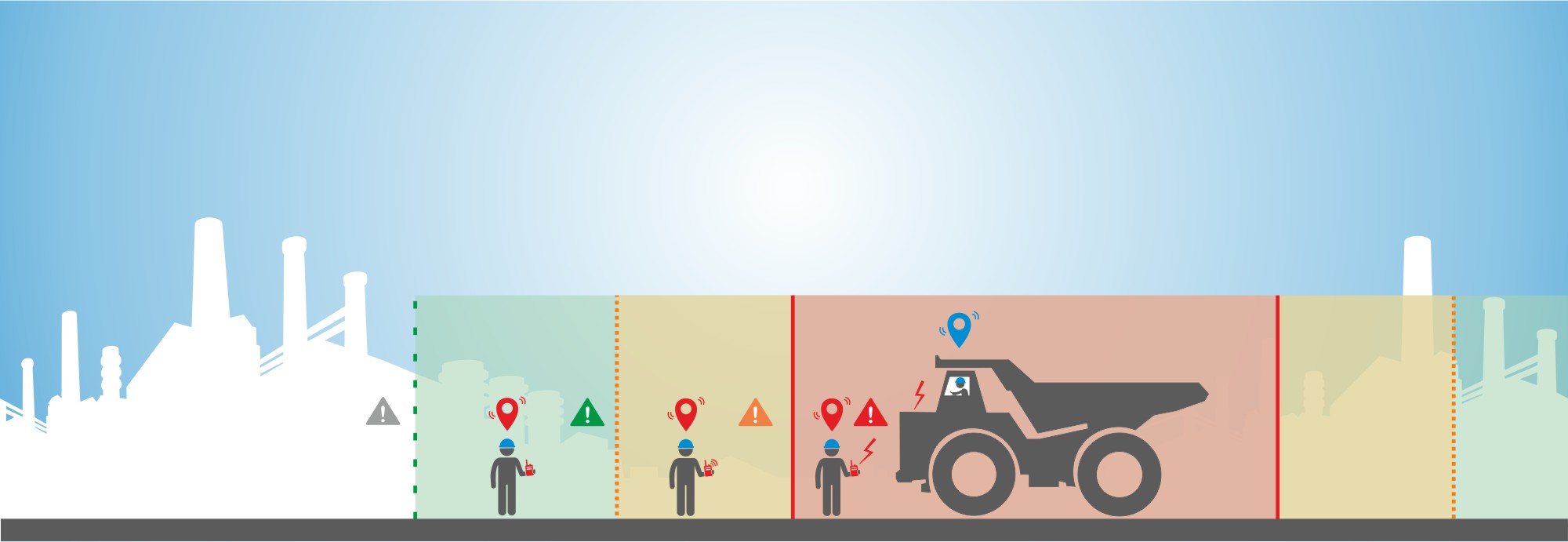
The system is designed to warn of possible collisions between vehicles and of vehicles hitting workers equipped with personal devices.
Vehicles and personnel
Control of a worker with a personal tag approaching an equipped vehicle. Both the driver and the worker receive a warning. Helps reduce injuries caused by vehicles hitting people.
Vehicle to vehicle
Control of equipped vehicles approaching each other, with information shown on the driver display. Helps reduce downtime caused by vehicle collisions.
Objects out of the line of sight
Detection of an equipped object that the operator cannot see, provided there is radio access to at least one antenna of the system.
From object detection to a warning
1. Equipping vehicles and personnel
A PROD CAS 1700 kit is installed on the vehicle. Workers receive compatible personal tags.
2. Determining relative position
Radio devices exchange signals with equipped objects. The control unit processes the measurements and determines where the objects are relative to the vehicle.
3. Assessing dangerous proximity
The system compares the position of the object with the configured zones and generates the corresponding alert level.
4. Alerting the people involved
The driver receives an audiovisual warning. The worker receives sound, light and vibration alerts on the personal device.
UWB is used to determine the relative position of objects. UHF is used for long-range detection and service data exchange, and BLE for auxiliary device configuration interfaces.
Three alert levels: a clear view of the situation around the vehicle
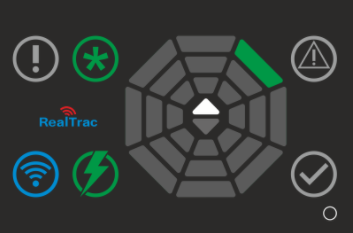
Attention zone
Information about equipped objects for which the system does not detect a risk of collision.
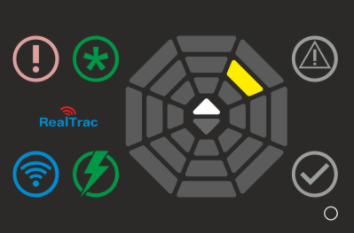
Danger zone
A warning about objects that may be hit or collided with if the vehicle keeps its direction of travel.
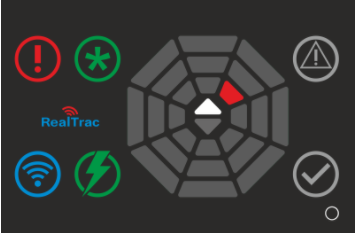
Emergency zone
A warning about objects for which the system detects a high probability of a person being hit or a collision.
In the typical indication, each level is divided into eight sectors, 24 sectors in total. The number and shape of the zones may differ in some configurations.
Dynamic zones
The shape, size and position of the control zones are configured to suit the vehicle type, the operating conditions and industrial safety requirements. The zones can change with the speed and direction of travel or when attachments and working tools are engaged.
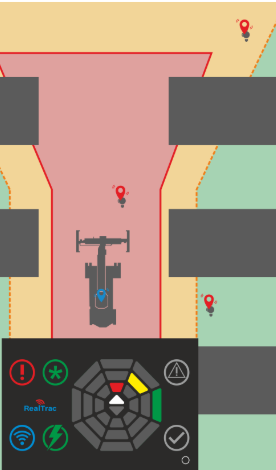
Both the driver and the worker receive a warning
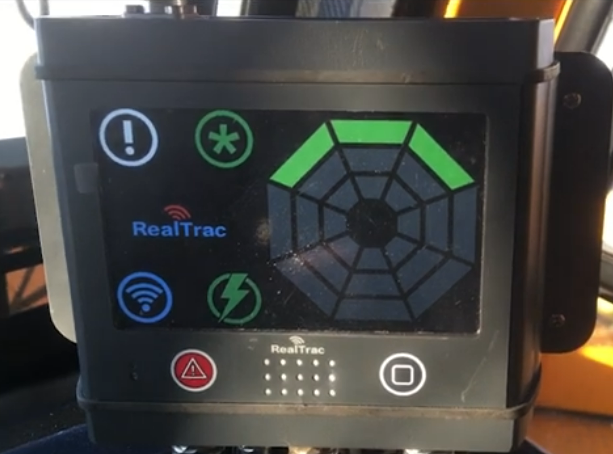
Information on the driver display
The display or alert device shows the state of the control zones and reports dangerous proximity with visual and audible signals.
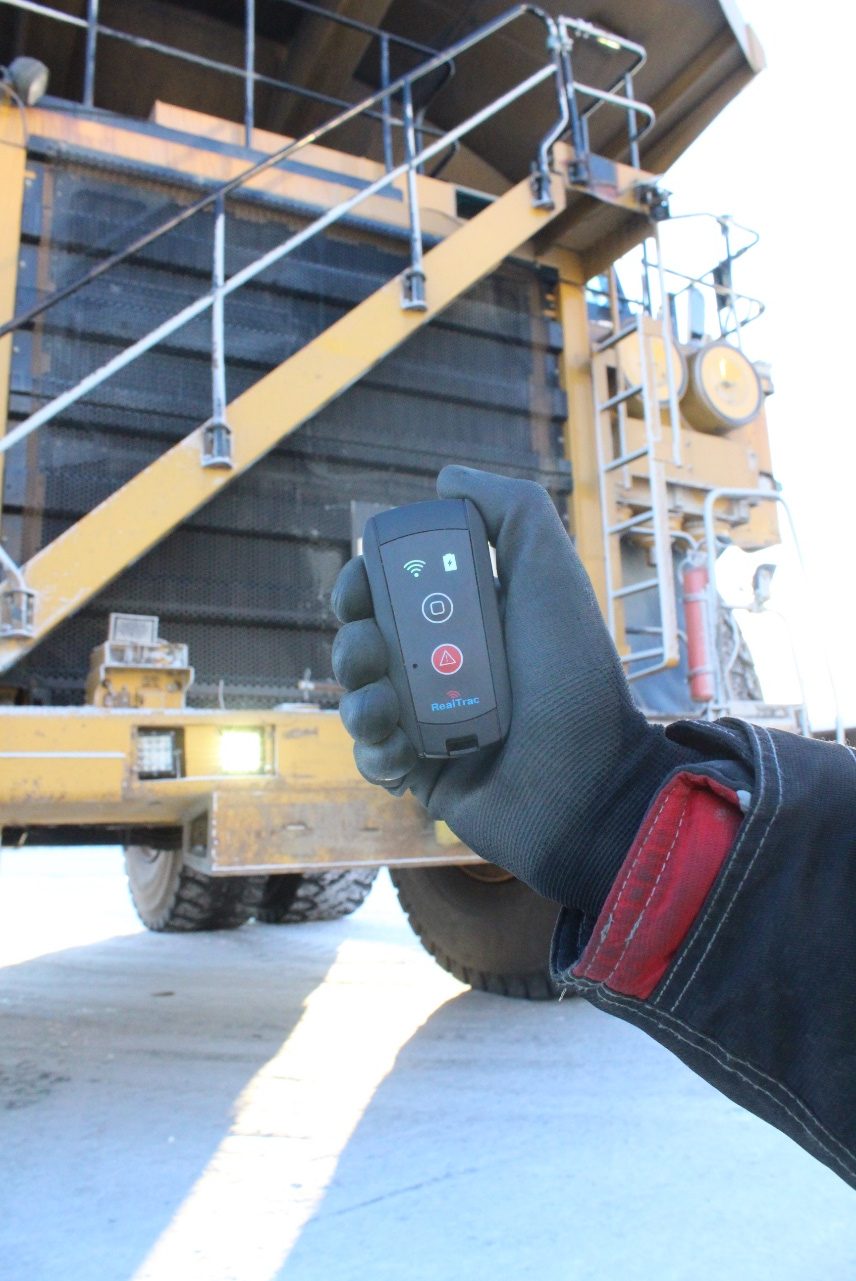
Signal on the personal tag
The worker is warned by sound, vibration and light. The audio and vibration alert settings are configured by the system administrator.
Recognizing presence in the cab
The in-cab personal tag detection zone makes it possible to tell the operator at the workstation from personnel outside the vehicle. The system does not assign objects inside this zone to the Emergency level. The typical zone size is 1 to 2 m; for a zone larger than 2 m, an additional PROD VID 100 personal tag detection unit can be used.
Additional information about objects beyond direct view
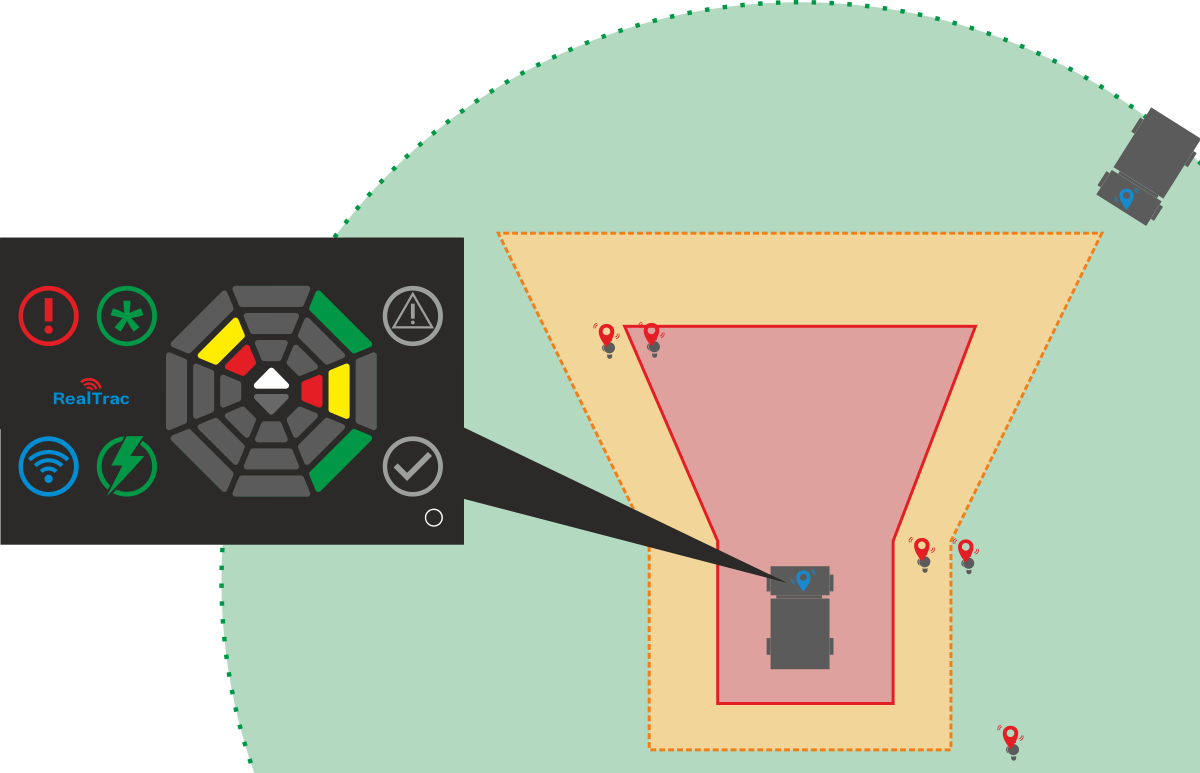
Long-range detection: up to 250 m
In long-range detection mode, the system shows three green sectors on the driver display in the direction of the equipped object.
Condition: the function is used on vehicles with a radio-transparent configuration in which the front and rear PROD VBU 030 antennas operate independently. Availability of the function is checked when the kit is selected.
Detection behind obstacles
Detection behind obstacles or at long range makes it possible to detect equipped objects out of the line of sight if they are within radio range of at least one PROD VBU 030 antenna.
Condition: the stated maximum range is up to 250 m. Whether an object can be detected depends on the radio access conditions at the site.
Long-range detection should not be equated with accurate positioning over the entire stated distance. Metal structures, electromagnetic interference and environmental conditions can weaken the radio signal and reduce position accuracy.
The kit is selected for your vehicles
PROD CAS 1700The system configuration depends on the vehicle dimensions, the geometry of the danger zones and the requirements for monitoring the space around the vehicle. The number of antennas and the tag types are defined for each project.
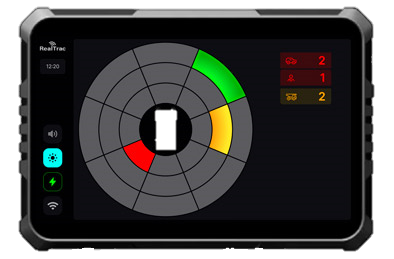
Control unit and driver display
Processes measurements, runs RealTrac CAS and shows information about the control zones and warnings in the cab.
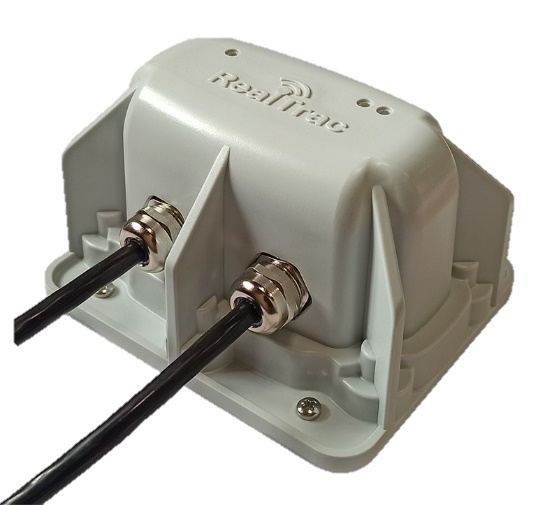
Antennas
Exchange signals with equipped objects around the vehicle. From 1 to 8 units, depending on the version.
Vehicle tags
Used to equip vehicles in line with the project configuration.
Personal tag detection unit
Creates the in-cab personal tag detection zone in the corresponding configuration.
Personal tags
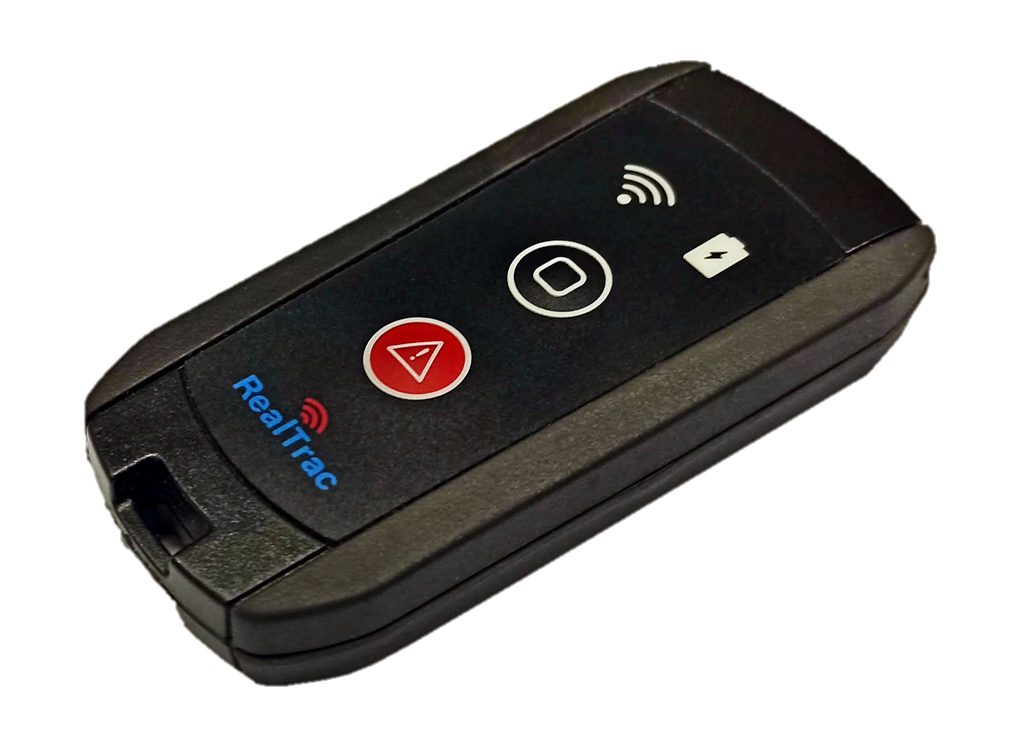
PROD TAG 210
Personal tag for use inside buildings and at industrial sites.
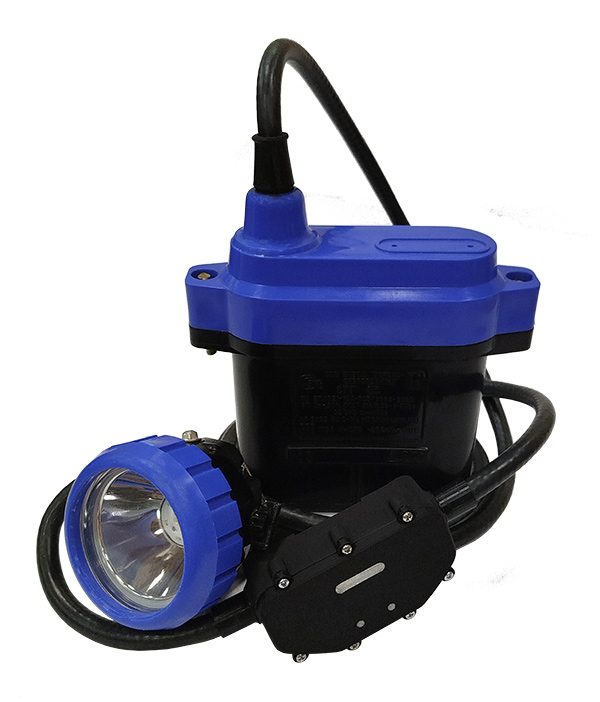
PROD TAG 411
Personal tag for underground mines: built into the cap lamp and powered by the lamp battery.
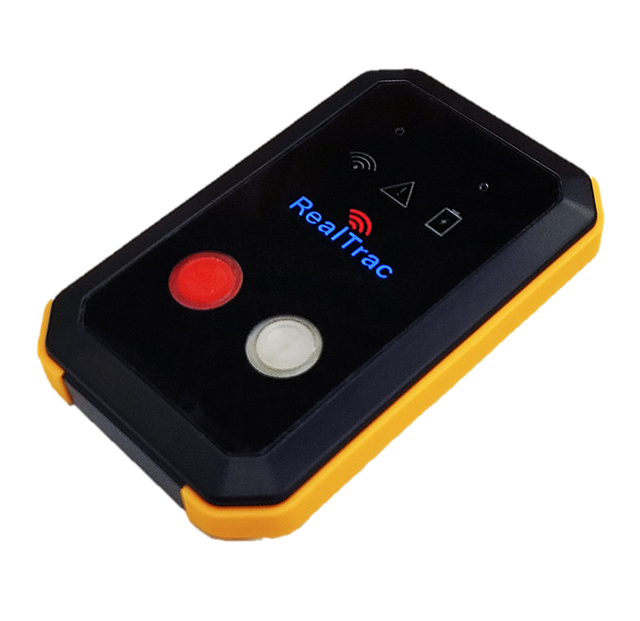
PROD TAG 730
Hybrid personal tag for open areas and buildings.
PROD CAS 1700 versions
The number in the version designation is the number of PROD VBU 030 antennas in the kit.
| Version | PROD VBU 030 antennas | Purpose |
|---|---|---|
| PROD CAS 1700-1 | 1 | Detecting that an object is approaching |
| PROD CAS 1700-2 | 2 | Control of the main directions of approach |
| PROD CAS 1700-4 | 4 | Control of danger zones around the vehicle |
| PROD CAS 1700-6 | 6 | Extended control of zones around large vehicles |
| PROD CAS 1700-8 | 8 | Control of objects with complex geometry and higher zone coverage requirements |
Not sure which kit you need? Tell us the vehicle models and operating conditions, and we will use this information as the basis for selecting a configuration.
Integration with external vehicle systems
RealTrac CAS control units have two dry contact relays. They make it possible to send signals to external systems when dangerous proximity is detected. Integration over CAN and through the speed limiting module is also possible.
Sending control signals
The system can send a signal to a third-party slowdown, vehicle stop or audible alarm system via relays, over CAN or through the speed limiting module. The connection conditions and the response logic are defined in the project.
Taking the state of external devices into account
The system can receive data from external sensors and take their state into account. For example, the state of the parking brake can be considered when the event log is generated.
RealTrac CAS and Nerospec
Joint operation of RealTrac CAS and Nerospec is supported. RealTrac CAS detects dangerous proximity and sends an intervention request; the Nerospec OSCON vehicle intervention system slows the machine down or brings it to a controlled stop. More in Level 9 with Nerospec OSCON.

RealTrac CAS is not an emergency stop device. Integration is carried out by qualified specialists trained by RealTrac, in accordance with the project and operating documentation.
Industry standards: EMESRT PR-5A
The Earth Moving Equipment Safety Round Table (EMESRT) publishes Performance Requirement 5A (PR-5A) for vehicle interaction systems as leading-practice guidance for users and designers. It covers three types of unwanted events: vehicle to person, vehicle to vehicle and vehicle to equipment or environment. PR-5A describes the last three layers of the EMESRT 9-layer control model, where technology helps the operator and the vehicle react.
RealTrac CAS is designed to support these control levels:
- Level 7, situational awareness: information that helps the operator observe and understand hazards nearby, such as where an object is and how far away it is. The RealTrac CAS driver display shows the state of the control zones around the vehicle.
- Level 8, advisory controls: alarms that warn the operator of an imminent threat of collision. RealTrac CAS uses three alert levels (Attention, Danger and Emergency), with audiovisual warnings for the driver and sound, light and vibration on the worker's personal tag.
- Level 9, intervention controls: automatic control of vehicle functions to prevent or mitigate a collision. RealTrac CAS can send signals to external slowdown and stop systems via relays, over CAN or through the speed limiting module; the connection and the response logic are defined in the project.
PR-5A also expects the at-risk zone to depend on the equipment type and closure speed. RealTrac CAS zones are configured for the vehicle type and operating conditions and can change with speed and direction of travel.
Level 9 with Nerospec OSCON
RealTrac provides the detection, zoning and decision logic. Integration with Nerospec OSCON, an OEM-independent EMESRT Level 9 vehicle intervention control system, adds automatic intervention in the braking and traction circuits of any machine.
- RealTrac CAS detects an object entering the Emergency zone and issues an intervention request based on the configured rules.
- Nerospec OSCON takes over motion control and automatically reduces speed or performs a controlled stop.
- The combined solution works in surface and underground operations and with mixed OEM fleets.
Together, RealTrac CAS and Nerospec OSCON turn collision avoidance from «warn and display» into «warn, guide and intervene when necessary».
For mining, industrial and logistics sites
All solutions
Mining operations
Surface and underground sites that need proximity control for equipped vehicles and personnel.
Plants and industrial sites
Sites with a high concentration of vehicles and workers.
Warehouses, terminals and ports
Logistics sites where vehicles and personnel work in a shared space.
The equipment version and whether it may be used depend on the site conditions. Explosive atmospheres require a separate selection of suitable equipment and a check of its approval documentation. Need a system for special conditions? See custom development.
PROD CAS 1700 key specifications
| Monitored objects | Equipped vehicles and personnel with compatible devices |
|---|---|
| Alert levels | Attention / Danger / Emergency |
| Typical indication | Three levels of eight sectors each; the configuration may differ |
| Long-range detection | Up to 250 m, subject to the conditions for using the function |
| Detection behind obstacles | With radio access to at least one PROD VBU 030 antenna; stated maximum up to 250 m |
| Standalone operation | Detection and alerts without a connection to a server or the Internet |
| Radio technologies | UWB, UHF, BLE |
| Number of PROD VBU 030 antennas | 1, 2, 4, 6 or 8, depending on the version |
| Operating temperature | From −40 to +45 °C |
| Relative humidity | Up to 85%, non-condensing |
| Component protection | IP65 to IP69, depending on the device |
| Integration outputs | Two dry contact relays; CAN; speed limiting module |
The final kit specifications are confirmed at the design stage and recorded in the equipment specification.
From your site's task to a working configuration
1. Task description
We clarify the vehicle types, the number of workers, the operating conditions and the dangerous proximity scenarios.
2. Equipment selection
We define the kit configuration, the number of radio devices, the tag types and the integration requirements.
3. On-site testing
We agree on a test program for the selected configuration and the criteria for evaluating it under the conditions of your site.
4. Commissioning
We carry out the agreed installation and configuration work, check how the system operates and train the users.
For a preliminary selection, prepare
- vehicle models and quantities;
- the number of workers to be equipped;
- a description of the site and operating conditions;
- requirements for external slowdown and stop systems;
- any special requirements for the equipment version.
RealTrac CAS at customer sites
All case studies
Questions about using the system
Does the system detect a person without a tag?
Personnel are monitored with compatible personal devices. RealTrac CAS should not be regarded as a universal system for detecting people and obstacles that carry no equipment.
Can the system detect an object around a corner?
Yes. Detection behind obstacles or at long range makes it possible to detect equipped objects out of the line of sight if they are within radio range of at least one PROD VBU 030 antenna. Whether this works is checked against the conditions of the site.
Does the system stop the vehicle automatically?
The main function of RealTrac CAS is to warn of dangerous proximity. The system can send signals to external slowdown and stop systems via relays, over CAN or through the speed limiting module. Whether such a connection is possible, and on what terms, is defined in the project. RealTrac CAS is not an emergency stop device.
Does one kit fit any vehicle?
No. The number of antennas and the equipment configuration depend on the vehicle dimensions, the configuration of the danger zones and the requirements for monitoring the space around the vehicle. The PROD CAS 1700 range includes versions with 1, 2, 4, 6 and 8 PROD VBU 030 antennas.
Will the driver's tag trigger an alarm inside the cab?
The system provides an in-cab personal tag detection zone. Objects inside the configured zone are not assigned to the Emergency level. The zone is configured for the specific cab and equipment configuration.
Does the system need a server or the Internet?
No. The kit on the vehicle detects dangerous proximity and alerts the driver and workers without a connection to a server or the Internet.
Can the system be used in explosive atmospheres?
This depends on the version of the specific equipment and its approval documentation. The RealTrac range includes explosion-proof equipment, but explosion protection is not a universal property of every PROD CAS 1700 kit.
Does the equipment need maintenance?
Yes. The operating documentation requires maintenance at least once every two weeks and a functional check at least once every six months. The specific work is carried out in accordance with the operating documentation.
What does the cost depend on?
On the number of vehicles and personal devices, the kit configuration, the equipment version, the integration requirements and the scope of work. To get an estimate, describe your vehicles and operating conditions.
Materials for technical evaluation
Operating documentation
The PROD CAS 1700 operating manual is available on request.
Let us select RealTrac CAS for your vehicles
Tell us where and how your vehicles operate. This information helps us define the equipment configuration, the installation requirements and possible integrations.
The basis for a preliminary proposal
- kit configuration for your vehicles;
- number and types of personal devices;
- installation requirements;
- options for connecting external systems;
- a list of data for further design work.